Business Page management
Overview
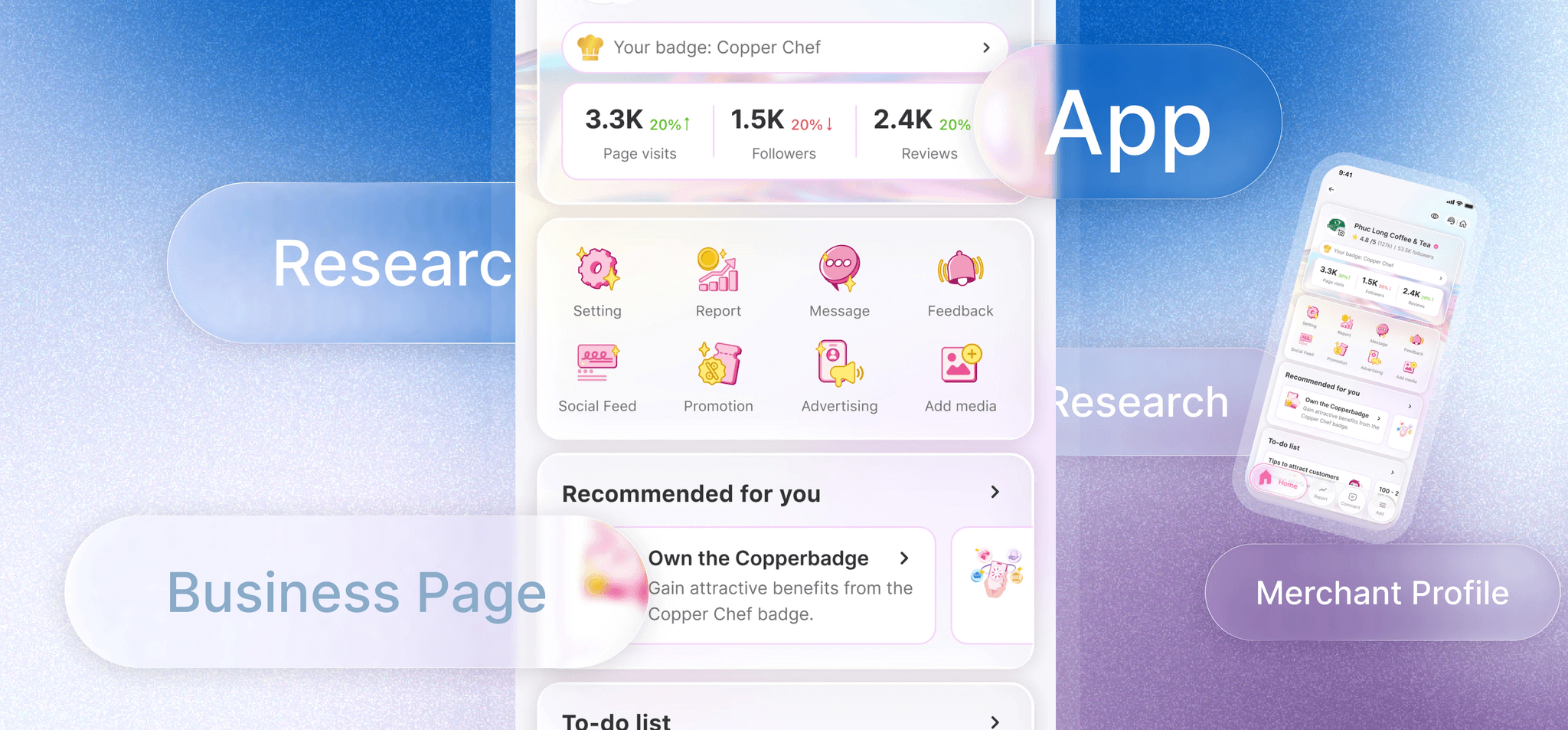
Discover & Empathy



Define the Problem

Ideation Phase

Prototype Design


Test Solutions

1. Context
MoMo is Vietnam’s top e-wallet, used for fast cashless payments in daily life. Inside this super app, a key feature is the Business Page, where merchants can create and manage their storefront. With access to 36M+ users, businesses can promote, engage, and boost both online and offline sales — driving growth while strengthening MoMo’s ecosystem.
Problem Statement:
Merchants find it difficult to understand, verify, and manage their Business Page effectively in the old version of the management interface, which leads to low engagement and underutilization of MoMo’s customer-reaching tools.
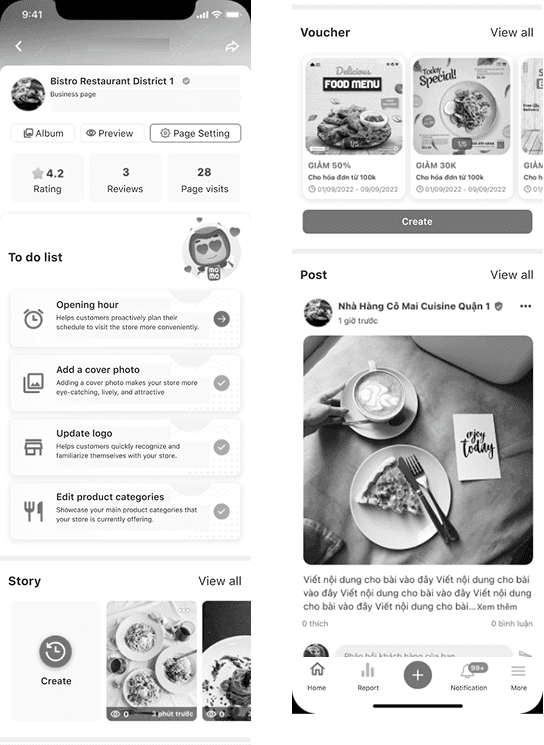
🤯 Merchants didn’t know what the page was for.
They couldn’t tell if it was just an info page or a tool to reach customers.
🤯 No performance feedback after taking actions.
Merchants couldn’t see views, interactions, or whether their efforts were effective.
🤯 No clear guidance on what to do first.
The to-do list lacked prioritization and didn’t explain the benefits of each step.
🤯 Features were scattered.
Actions like posting, editing info, or creating promotions were hard to find and not grouped logically.
🤯 Hard to use.
Navigation was confusing, and merchants didn’t feel confident using the app.
🤯 Low engagement.
Because of all the above, most merchants didn’t fully use the available features.
2. Understand Merchant Needs
To ensure the redesign was anchored in user needs, I applied the Jobs To Be Done (JTBD) framework to explore the daily goals of merchants. 3 Keys JTBD Goals:
Check visits, interactions, ratings.
Run promotions, update info, reach more customers.
Post updates, edit offers, maintain a fresh presence.
3. Competitive Analysis
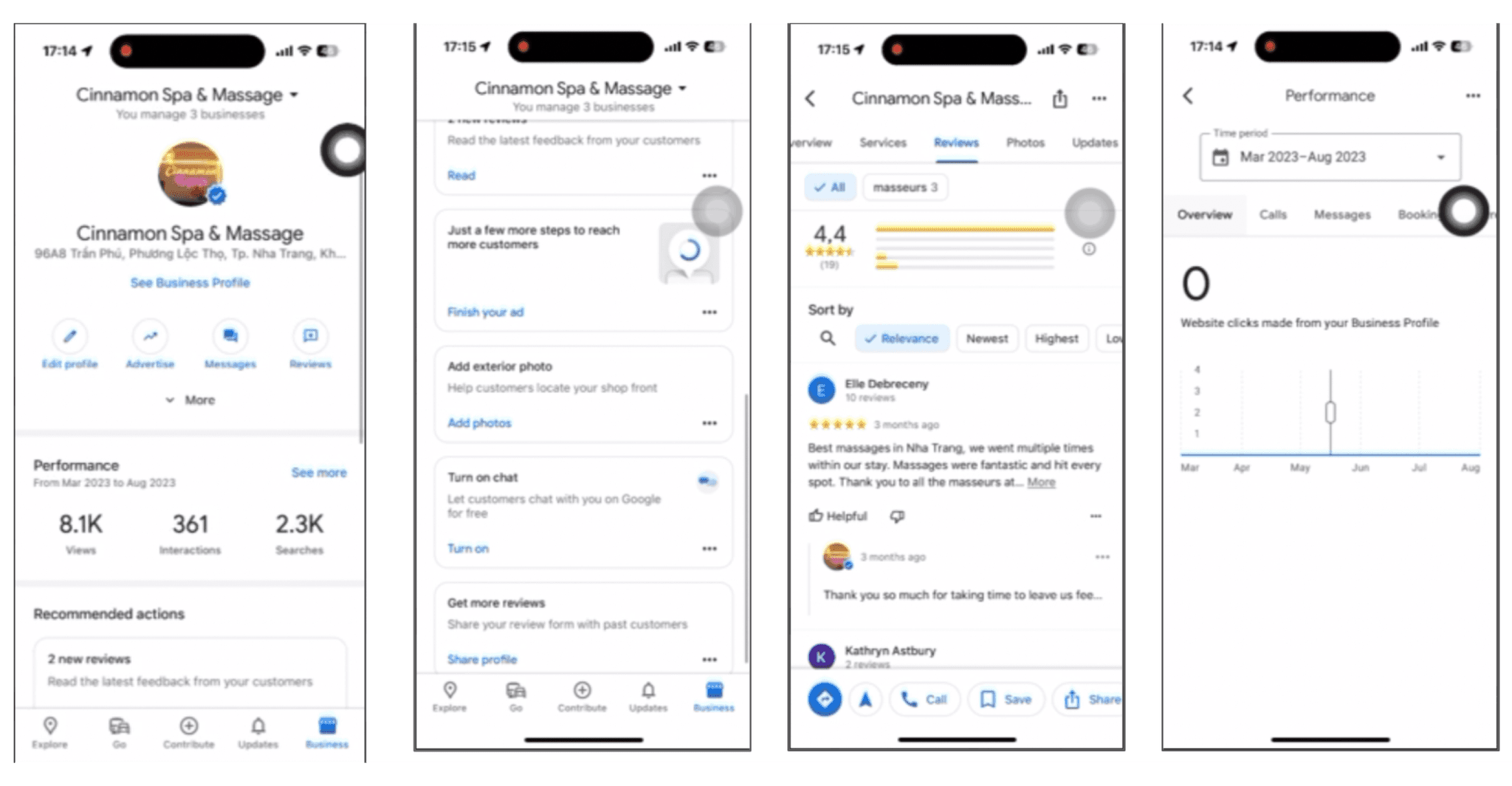
To understand how other platforms support merchants in managing business pages, I analyzed two major players: Google Business Profile and Meta Business Suite. The goal was to identify how they structure content, guide user actions, and surface key tools.
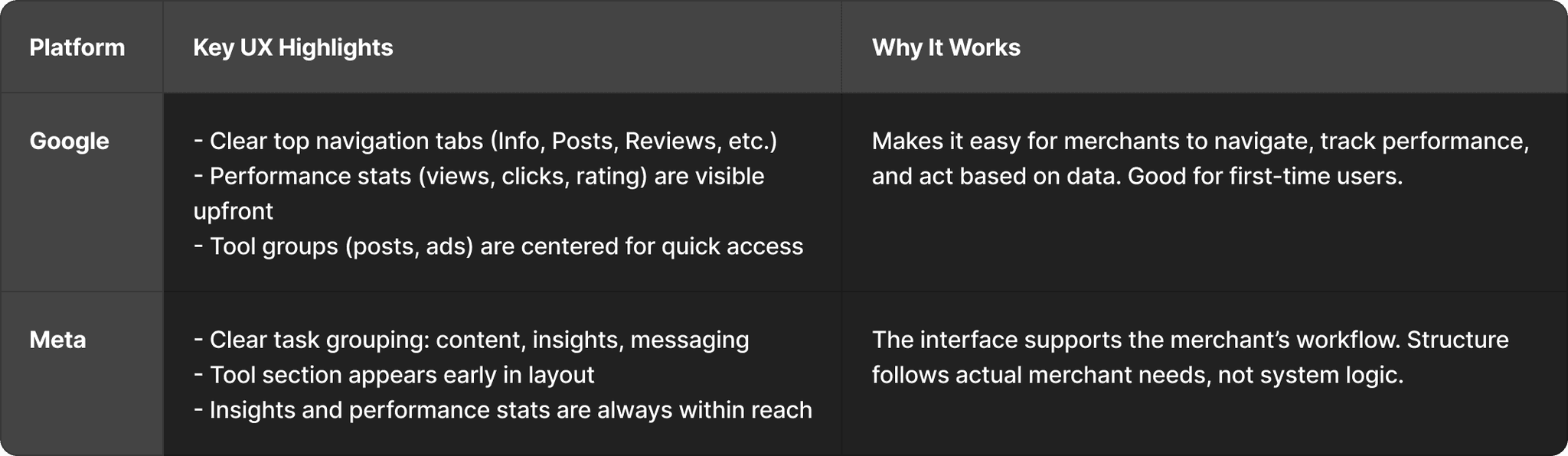
Google Business Profile Management App
Meta Business Profile Management App
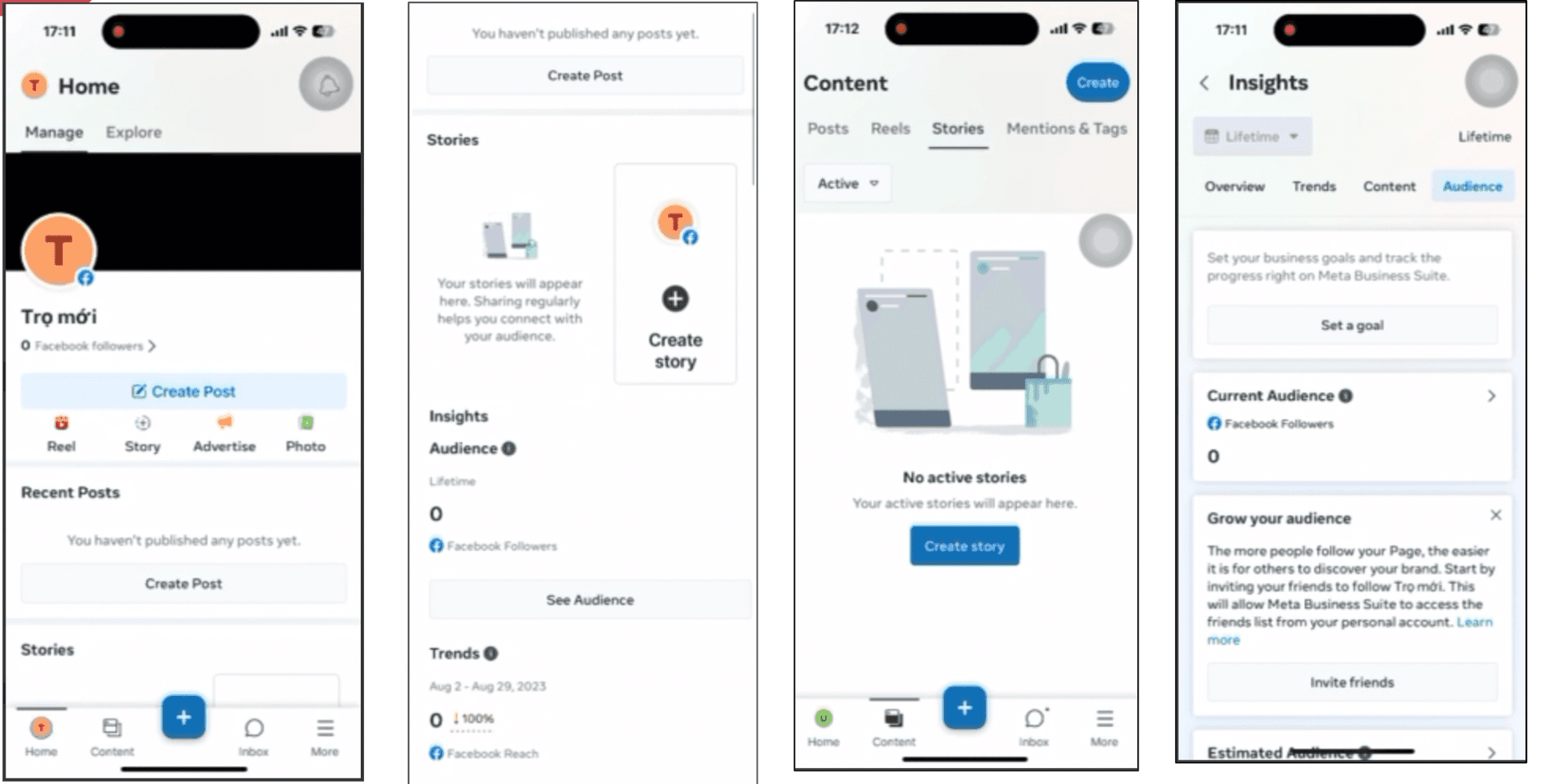
Takeaway: Both apps prioritize performance visibility, guide merchants with clear structure, and place core tools where merchants can act immediately.
4. Reframing My Product Structure
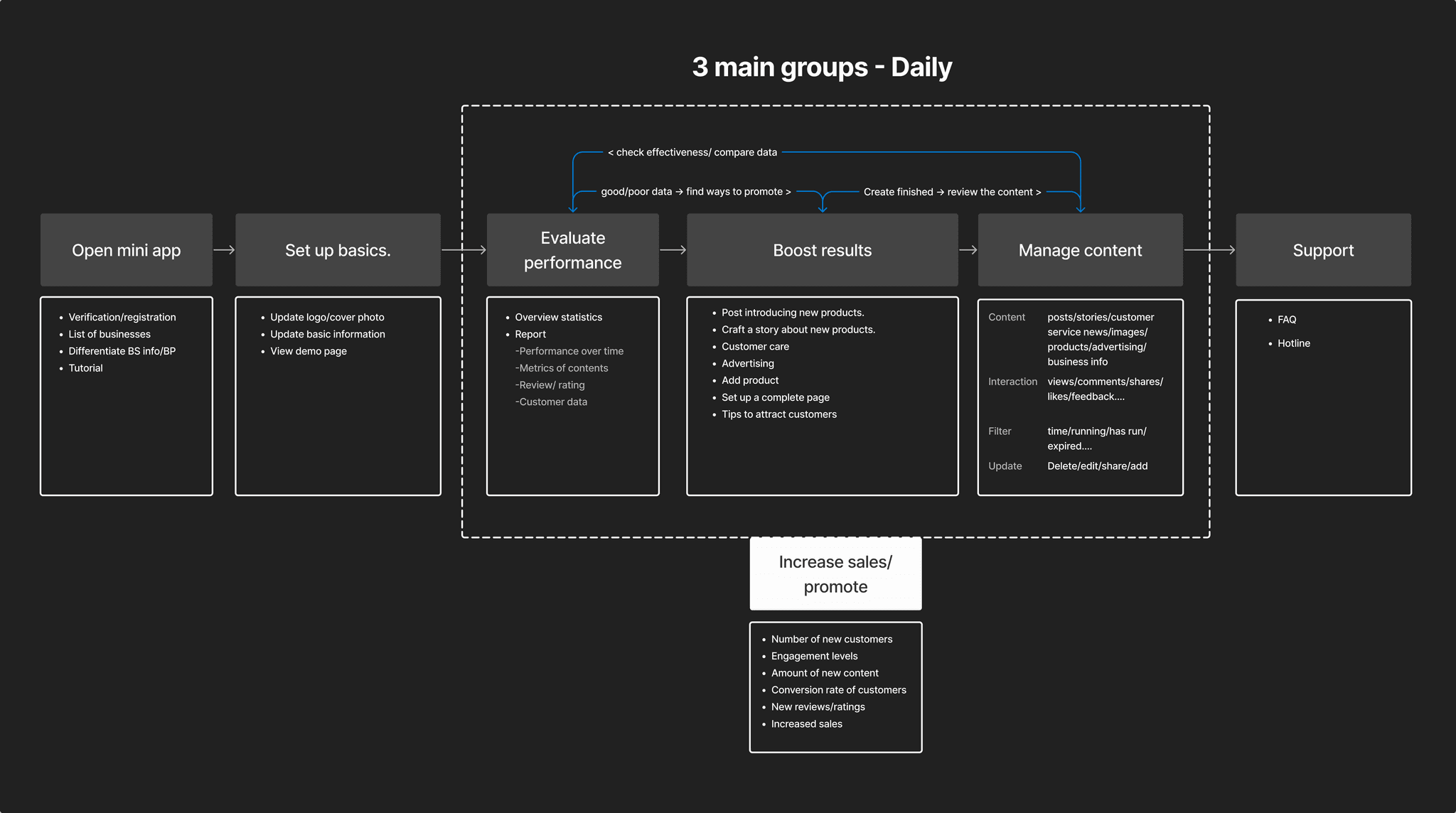
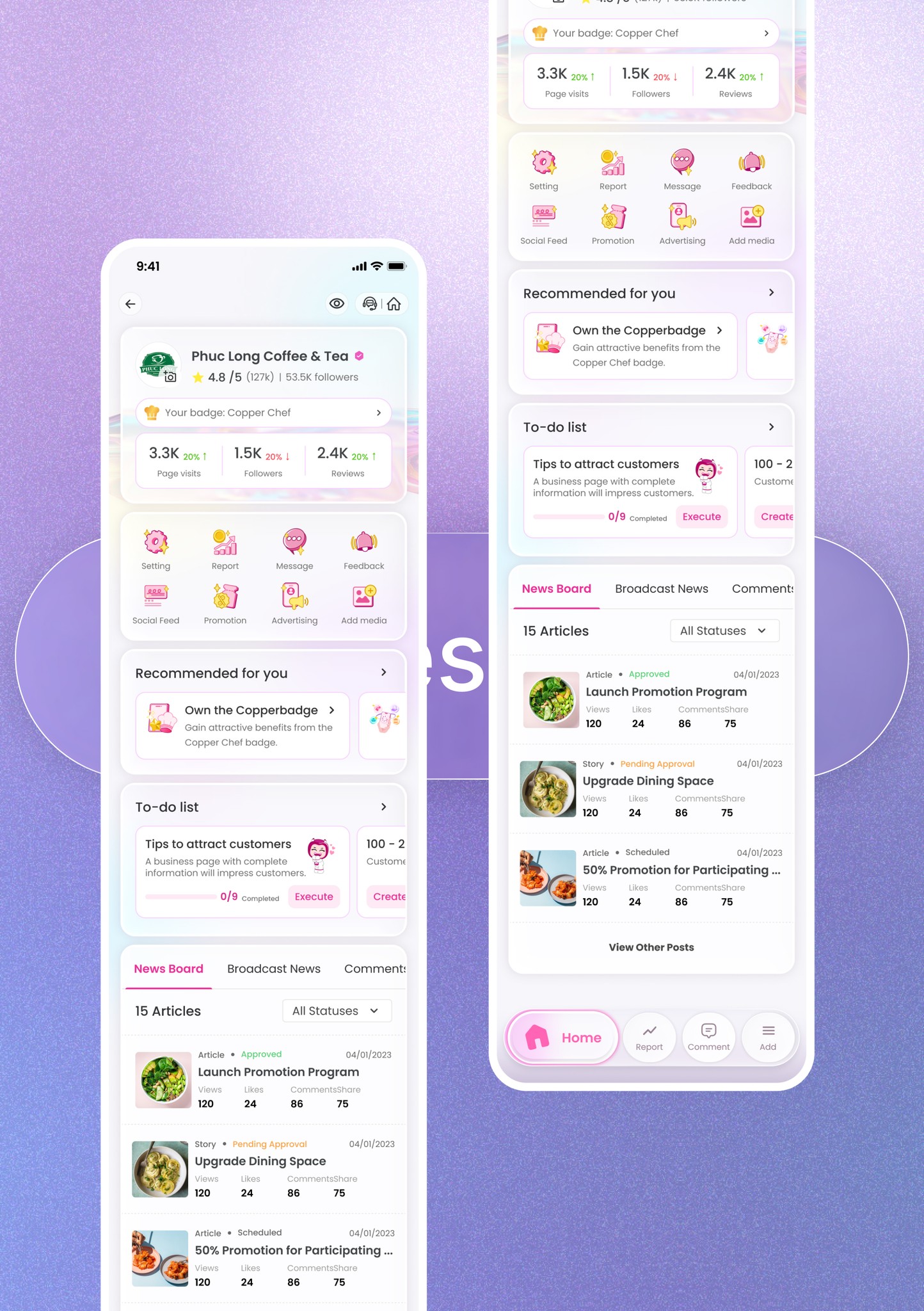
Based on JTBD, user pain points, and competitor learnings, I restructured our Business Page management interface into 6 functional groups, aligning with real merchant behavior.
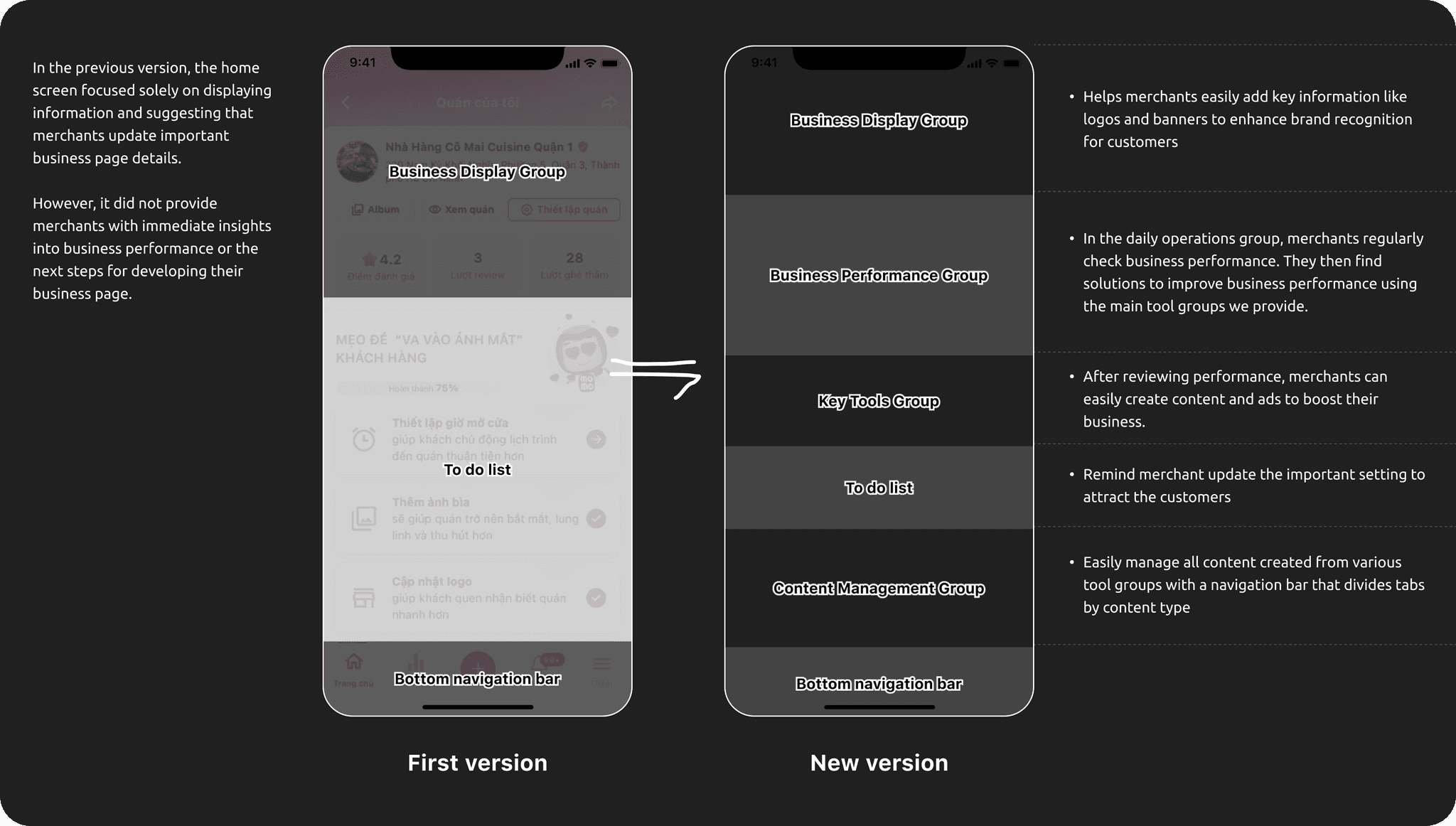
This grouping helps reduce clutter, improves action discoverability, and supports users based on their mindset (not just feature buckets).
5. Iterative Design and Testing
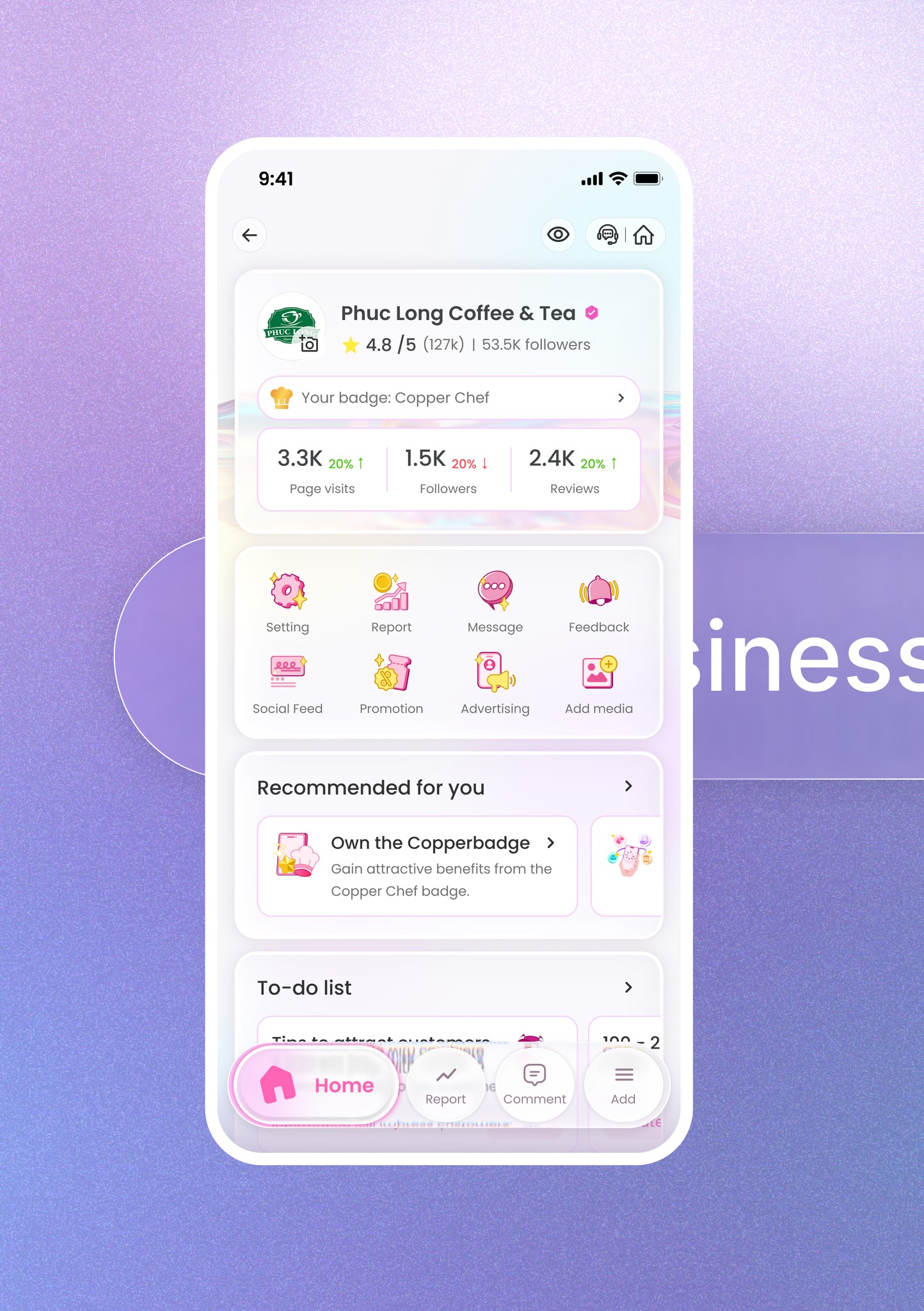
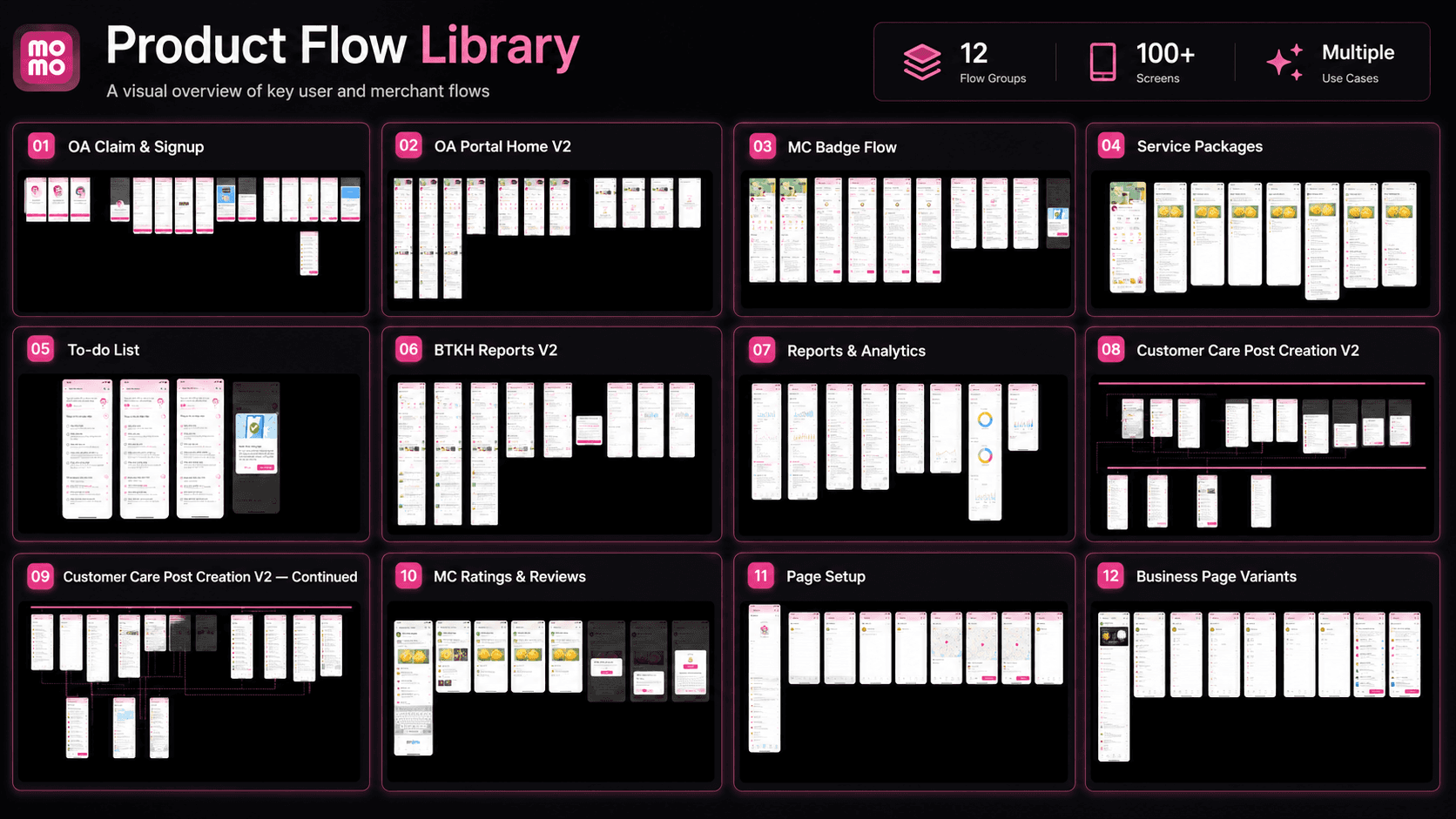
After defining the information structure, analyzing the merchant journey, and studying competitive benchmarks, I translated all findings into a high-fidelity interface. The design aims to deliver clarity, usability, and brand expressiveness while aligning with the product’s design system.
Next Steps
- User Testing: Conduct usability tests to validate assumptions and identify usability issues.
- Feedback Loop: Collect feedback from merchants to refine the feature set and layout.
- Performance Tracking: Plan to integrate metrics to help merchants see the results of their actions (e.g., post views, customer reach).
Phone: 0352009433
Gmail: tranghuyen5314@gmail.com
LET'S WORK
TOGETHER